
Nestlé Under the Shartify Trust Ranking Lens: Crisis of Confidence and the Future of the Food Industry

 shartify
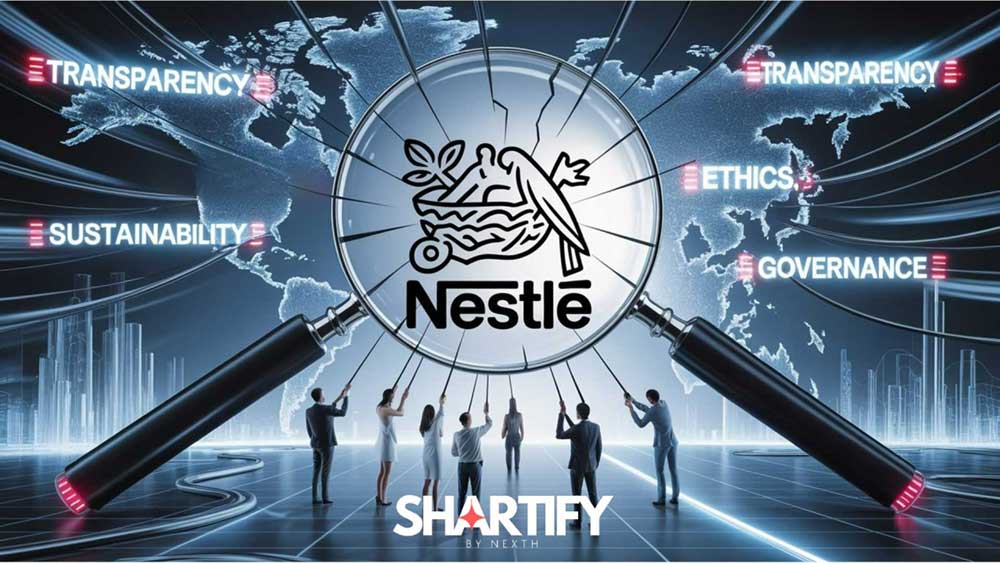
Today, we are examining Nestlé through the lens of the Shartify Trust Ranking — a system designed to measure how consistently a brand aligns its declared values with real-world governance, transparency, and public perception. In Nestlé’s case, the key parameters under scrutiny include transparency, sustainability, reputation, product integrity, and ethical governance — all areas where the gap between what is communicated and what is practiced is becoming increasingly evident.
In recent months, the company’s trust capital has been seriously undermined by a series of scandals and controversial decisions that have shaken its public image and investor confidence.
Crisis and Decline of Trust: What’s Really Happening at Nestlé
Several recent events have become symbolic of a deeper structural issue:
- Withdrawal from the Dairy Methane Action Alliance, a global coalition committed to reducing methane emissions in the dairy industry. Nestlé’s decision triggered accusations of greenwashing and raised doubts about its genuine commitment to climate goals.
- Criticism over plastics and unsustainable packaging. The company continues to struggle with achieving recyclability targets, especially for multi-layer materials, exposing the limitations of its supply chain transformation.
- Governance crisis. The sudden removal of senior executives due to violations of the company’s code of conduct — including undisclosed relationships — revealed weaknesses in internal oversight and raised questions about the ethical culture at the top.
Taken together, these signs point to a structural crisis of trust — not just reputational, but cultural and systemic. Nestlé’s challenge is no longer about communication; it’s about coherence.
Root Causes of the Crisis
The Shartify analysis highlights a combination of intertwined causes behind Nestlé’s declining trust rating — many of which are shared across the global food and beverage industry:
- Weak internal governance and lack of accountability Ethical scandals and opaque decision-making show that internal controls are not fully effective in preventing misconduct or ensuring leadership coherence.
- Environmental promises vs. operational reality Public sustainability pledges often remain superficial, with limited measurable impact. The widening gap between announcements and actions reinforces perceptions of greenwashing.
- Value chain misalignment with ESG standards Persistent issues around water usage, supplier practices, and waste management highlight the disconnection between declared ESG objectives and day-to-day operations.
- Changing consumer paradigm New generations choose brands that demonstrate real transparency and authenticity. Legacy corporations that fail to adapt are increasingly seen as culturally outdated.
- Leadership instability and performance pressure Internal reshuffles, cost-cutting measures, and leadership turnover signal structural strain, with financial imperatives often outweighing ethical or social priorities.
Consequences: The Erosion of Trust
Nestlé’s crisis reflects a broader, systemic shift in the industry. Its implications go far beyond short-term reputation management:
- Rise of critical consumption — consumers increasingly turn to independent, ethical, or local brands that embody credibility and transparency.
- Regulatory tightening — new ESG and packaging regulations, particularly in Europe, demand verifiable and auditable sustainability practices.
- Investor scrutiny — ESG-driven funds are reducing exposure to brands that fail to demonstrate measurable progress.
- Permanent reputational risk — in the age of AI-driven media, reputation collapses can occur in hours, and rebuilding trust may take years of consistent proof.
The Future of the Food Industry: Between Crisis and Reinvention
Nestlé’s current challenges are not isolated events but part of a structural realignment across the entire food and beverage sector. The defining factor for future success will no longer be scale, but trust — the new currency of competitiveness.
Key transformation trends include:
- Healthier, functional food Demand is rising for products offering genuine health benefits: reduced sugar and salt, natural ingredients, and personalized nutrition solutions.
- Alternative proteins and sustainability Innovation in plant-based and cultured proteins will define the next generation of food leadership.
- Circular economy and smart packaging Waste reduction is evolving into full life-cycle optimization — where every phase of production, distribution, and consumption contributes to circular efficiency.
- Ethical and transparent governance The future belongs to brands that make their supply chains traceable, leveraging blockchain, AI, and independent audits to ensure full visibility and credibility.
- Digital innovation and responsible data AI and predictive analytics are transforming the food chain — from demand forecasting to waste reduction — but must be guided by strong ethical frameworks.
How Nestlé Can Regain Trust
To climb back up the Shartify Trust Ranking, Nestlé must move beyond “damage control” and embrace a strategy of trust regeneration. This requires:
- Strengthening governance with independent oversight and transparent accountability mechanisms.
- Turning environmental pledges into measurable, publicly verified results.
- Redesigning the supply chain through circular and ethical sourcing models.
- Fostering credible leadership, capable of admitting mistakes and demonstrating authentic progress.
- Placing human and social value back at the center of its brand and business strategy.
Final thoughts
Nestlé’s case epitomizes the global shift dividing companies that talk sustainability from those that live it. The Shartify Trust Ranking is more than a reputational thermometer — it’s a barometer of how deeply a company is prepared to evolve in a world where trust, ethics, and transparency define long-term value.
If Nestlé embraces this moment as an opportunity for transformation, it could emerge stronger — not just as an industrial leader, but as a standard-bearer for a more credible and regenerative food industry. If not, it risks remaining a symbol of a corporate model the world is rapidly outgrowing.