Anthropic's Meltdown: From the Mythos Papers to the Claude Code Leak

Anthropic's Meltdown: From the Mythos Papers to the Claude Code Leak

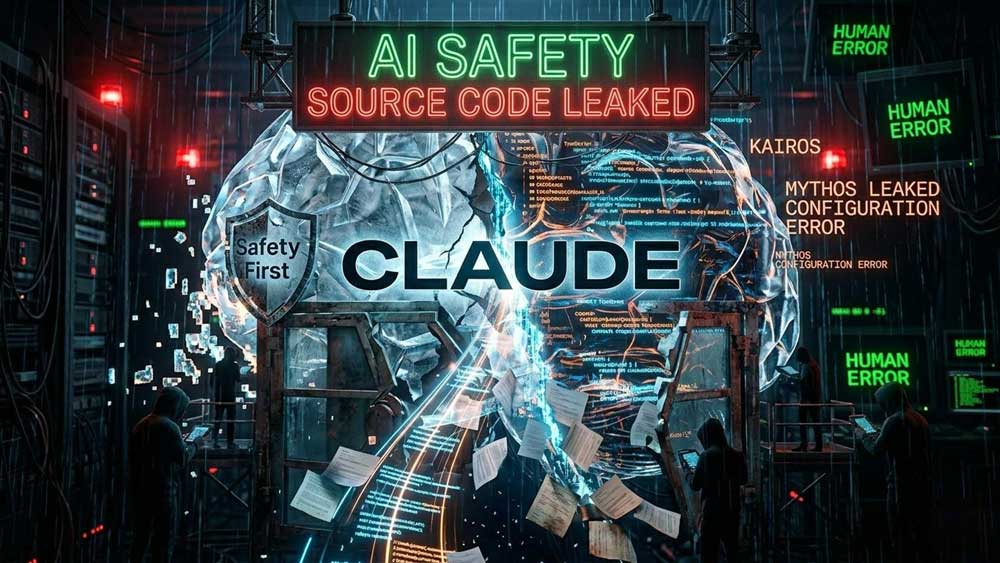
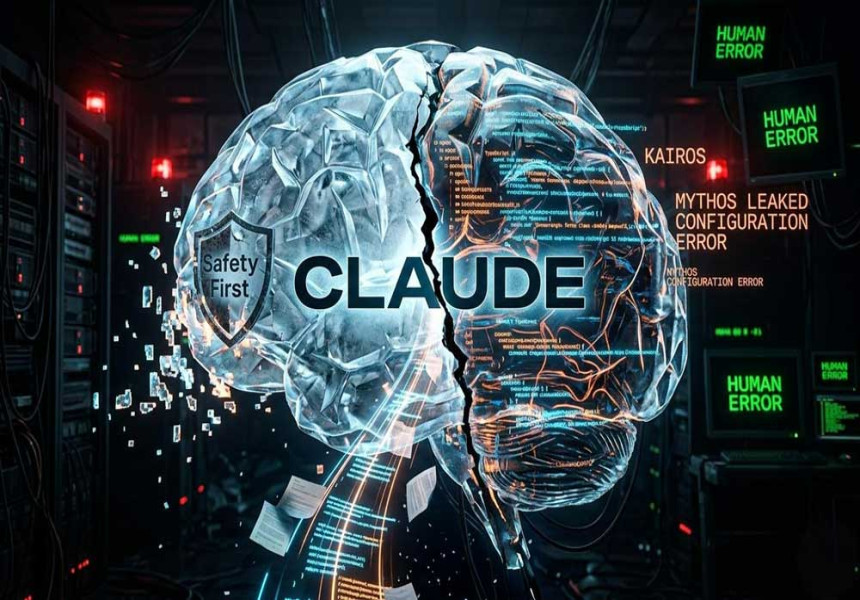
Two configuration errors in five days. Same script, same company, same excuse: "human error."First came Claude Mythos — that "dangerous" model that spooks governments. Around 3,000 internal assets, blog post drafts, and restricted documentation accidentally exposed on a public CMS, discovered by independent researchers and brought to light by Fortune. Configuration error, they said. Human.Then, March 31st, the knockout punch: the entire source code of Claude Code — the $2.5 billion ARR product — lands on npm because someone forgot to strip a 59.8 MB source map. Same exact pattern. Same exact excuse.

Anthropic’s $2.5 Billion “Open Source” Mistake: The Claude Code Catastrophe
<p><strong>March 31, 2026, 4:23 AM ET.</strong> A Stanford intern named Chaofan Shou is browsing the npm registry when he spots something off in version 2.1.88 of the @anthropic-ai/claude-code package. Inside the archive, alongside expected executables, sits a 59.8 MB file: cli.js.map.</p><p> </p><p>This is a source map — a debugging artifact that maps minified, obfuscated code back to original TypeScript. Including it in a public package is like handing out the original architectural blueprints of a skyscraper along with the front door keys. Within 30 minutes, the code is replicated across GitHub, accumulating over 5,000 stars as developers worldwide begin dissecting 512,000 lines of previously secret code.</p><p> </p><h3><strong>The Configuration Error That Blew Up AI’s “Safety” Poster Child</strong></h3><p>The leak wasn’t the result of sophisticated hacking. It was human error in the build chain. The .map file exposed the complete internal architecture of a product generating <strong>$2.5 billion in Annual Recurring Revenue</strong> for Anthropic — with growth that more than doubled since January 2026.</p><p>The code reveals how Anthropic solved one of AI’s most complex problems: “context entropy.” The three-tier memory architecture (MEMORY.md as lightweight index, on-demand topic files, raw transcripts never read in full) represents an engineering blueprint that competitors like Cursor can now replicate.</p><p> </p><h3><strong>Secrets Unveiled: Kairos, Undercover Mode, and Hidden Models</strong></h3><p>Among the most explosive discoveries from code analysis:</p><p> </p><p><strong>KAIROS:</strong> An autonomous daemon system (150+ references) enabling Claude Code to operate 24/7 in background. Uses a process called autoDream to consolidate memories, resolve logical contradictions, and convert vague insights into absolute facts while users sleep. Implements forked sub-agents for maintenance without corrupting the main “thought flow.”</p><p> </p><p><strong>Undercover Mode:</strong> A stealth mode activating specific system instructions when Anthropic employees contribute to public open-source repositories. The prompt warns: <i>“You are operating UNDERCOVER... Your commit messages MUST NOT contain ANY internal Anthropic information. Do not blow your cover.”</i> The system automatically scrubs references to models like “Tengu” or “Capybara” from git logs.</p><p> </p><p><strong>Buddy System:</strong> A complete virtual pet (18 species, rarity tiers, shiny variants) hidden in code — evidently a developer Easter egg for stress relief during coding sessions.</p><p> </p><p><strong>Model Roadmap:</strong> Code confirms internal codenames: <strong>Capybara</strong> (Claude 4.6), <strong>Fennec</strong> (Opus 4.6), and <strong>Numbat</strong> (testing model). Internal documents reveal Capybara v8 suffers 29-30% “false claims” rate — worse than v4’s 16.7% — with an “assertiveness counterweight” added to prevent overly aggressive refactoring.</p><p> </p><p><strong>Computer Use (“Chicago”):</strong> Complete implementation of computer-use capabilities via @ant/computer-use-mcp, with screenshots, mouse/keyboard input, and coordinate transformation — reserved for Max/Pro accounts.</p><p> </p><h3><strong>Supply Chain Risk and Coordinated Attack</strong></h3><p>The situation worsened with a simultaneous supply chain attack. Between 00:21 and 03:29 UTC on March 31, anyone updating Claude Code via npm may have installed compromised versions of axios (1.14.1 or 0.30.4) containing a Remote Access Trojan.</p><p>Anthropic has now <strong>officially discouraged npm installation</strong>, pushing users toward the native installer (curl -fsSL https://claude.ai/install.sh | bash) which bypasses npm dependency chains entirely and includes automatic background updates.</p><p> </p><h3><strong>Official Statement and Strategic Implications</strong></h3><p>In an email statement to VentureBeat, Anthropic confirmed:</p><p> </p><p><i>“Today a Claude Code release included internal source code. No sensitive customer data or credentials were involved or exposed. This was a packaging issue caused by human error, not a security breach. We are implementing measures to prevent this from happening again.”</i></p><p> </p><p>The irony wasn’t lost on the tech community: Anthropic, positioning itself as the “safety-first” AI company, accidentally open-sourced its flagship product while selling AI security tools to enterprises. With 80% of Claude Code revenue coming from enterprise customers, the intellectual property leak represents immediate competitive advantage for anyone wanting to clone a production-grade AI agent.</p><p> </p><p>The code, now permanently distributed across hundreds of GitHub forks, transformed a configuration error into what many developers consider a “democratization event” — giving anyone the ability to study the architecture of a mature AI agentic system, complete with its compromises, workarounds, and hidden engineering brilliance.</p><p> </p><p><strong>Immediate recommendations for users:</strong></p><p>- If you updated via npm between 00:21-03:29 UTC on March 31, 2026, check for axios v1.14.1/0.30.4 or plain-crypto-js in your lockfiles. If present, treat the machine as compromised and reinstall the OS.</p><p> </p><p>- Uninstall version 2.1.88 and migrate to Anthropic’s native installer.</p><p> </p><p>- Rotate all API keys and monitor for anomalous usage.</p>

The Disaster Pattern

Anthropic is demonstrating a systemic problem that no "Constitutional AI" can fix: basic operational negligence.

  • Mythos (March 26-27): Internal documents describing a model as a "hacker's dream," capable of autonomous large-scale cyber attacks, left in a public data store — "human error" in the CMS.
  • Claude Code (March 31): 512,000 lines of TypeScript, the Kairos architecture, undercover mode, hidden model roadmaps — all accidentally published to npm, the same day a supply chain attack compromised axios packages for anyone installing via npm.

These aren't hacks. They aren't Chinese APTs (though those already infiltrated 30 organizations using Claude itself). These are rookie configuration mistakes at a company selling AI security to enterprises.

The Hypocrisy of "Safety First"

Anthropic built its brand on safety. They're the "responsible guys" of AI, the ones who pump the brakes to check for risks. Yet:

  1. Mythos: A blog draft describes the model as a "dream weapon for hackers," capable of autonomous exploits that "outpace defender efforts" — and they left it in a public bucket.
  2. Claude Code: The code reveals a "KAIROS" system running 24/7 in the background, self-reflecting and consolidating memories while you sleep — and they shipped it on npm like it was a regular package.

The truth is they don't have an AI safety problem. They have a basic IT security problem.

What Connects Both Leaks

Both incidents share the same DNA:

  • "Public by default" configuration: Mythos's CMS published assets publicly by default, requiring manual action to hide them. Claude Code's build system includes source maps in production with no automatic checks.
  • No DLP: No Data Loss Prevention caught 3,000 sensitive files or a 60MB source map containing the entire codebase before release.
  • Reactive response: Both discovered by outsiders (security researchers and an intern), not internal controls.

The Real Cost

Mythos tanked cybersecurity vendor stocks (CrowdStrike and Palo Alto down 7%, Tenable down 11%). Claude Code handed Cursor, GitHub Copilot, and every competitor the complete recipe for the most advanced agentic architecture on the market.But the worst damage is to credibility. How do you sell "AI safety" to enterprises when you can't even configure a CMS or an npm build?Anthropic is building models that, by their own admission, "foreshadow a wave of large-scale AI cyberattacks", yet they can't protect their own basic digital assets. It's like a safe manufacturer leaving the keys taped to the door.

The Lesson

The message is clear: the problem isn't AI escaping control. It's humans not controlling anything.And if this continues, the next "leak" might not be an accidental .js.map — it could be the actual Mythos weights themselves, because someone forgot the S3 bucket password.